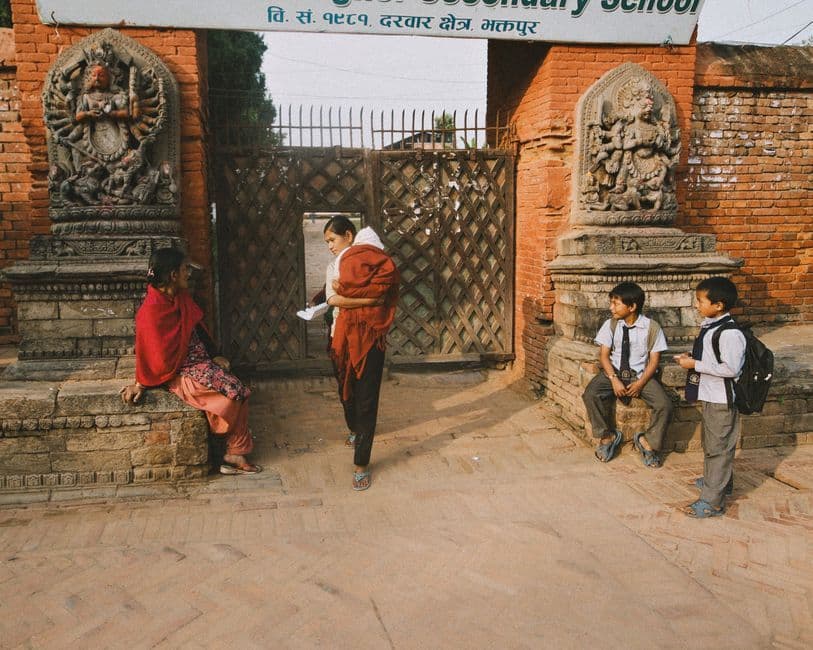
The Evolving Landscape of Nepali Education
Nepal's education system has always faced unique challenges, from geographical disparities in access to consistent quality across institutions. While traditional methods have served generations, the demand for adaptable, student-centric learning is growing. Enter AI and powerful language models like ChatGPT, which are now firmly integrated into many forward-thinking Nepali schools and universities, offering solutions that were once unimaginable.
These technologies are not merely supplementing; they are actively driving change. We see them addressing long-standing issues, helping bridge gaps, and pushing for an educational model that prioritizes individual student needs and future-ready skills, rather than just textbook memorization.
Personalized Learning Pathways with AI
One of AI's most impactful contributions is its ability to tailor the learning experience. Intelligent tutoring systems analyze a student's performance, identifying strengths and weaknesses, then adapt content accordingly. For a student struggling with calculus, AI can provide extra practice problems and simplified explanations, while advanced learners receive more complex challenges.
ChatGPT, in particular, acts as an always-available study partner. Students preparing for NEB examinations or complex engineering topics at IOE can ask specific questions, request concept summaries, or even generate practice quizzes based on their curriculum. This personalized attention ensures that every student progresses at their optimal pace, receiving targeted support without relying solely on limited classroom time.
Empowering Educators, Not Replacing Them
Teachers often grapple with heavy workloads, spending significant time on administrative tasks and repetitive grading. AI tools are proving invaluable here. They automate routine processes like grading multiple-choice questions or providing initial feedback on essays, freeing up educators to focus on deeper student engagement and creative lesson planning.
Imagine a university professor at Tribhuvan University leveraging AI to quickly identify common misconceptions across hundreds of student assignments, then designing targeted remedial sessions. ChatGPT can also assist teachers in generating diverse teaching materials, brainstorming lesson ideas, or even drafting customized parent communications, making their roles more strategic and less burdensome.
Accessibility and Bridging the Digital Divide
Access to quality education remains a challenge in many remote parts of Nepal. AI holds the potential to democratize learning by delivering educational content to underserved communities. AI-powered platforms can translate complex English texts into local Nepali dialects, making materials more comprehensible. They can also convert text into audio, assisting students with visual impairments or those in areas with low literacy rates.
While infrastructure like reliable internet and devices are still developing in some regions, ongoing government initiatives and private sector investments are steadily improving connectivity. These advancements mean AI's reach is expanding, bringing a wealth of knowledge to more students across the country.
Challenges and Ethical Considerations
The integration of AI is not without its hurdles. Concerns about data privacy, algorithmic bias, and potential over-reliance on AI by students require careful consideration. Educational institutions and policymakers, including bodies like the NEB, are actively working on guidelines to ensure responsible AI use. We must teach students critical thinking and AI literacy, not just how to use the tools.
Ensuring academic integrity in an AI-assisted environment is also a priority. Developing robust assessment methods that move beyond simple recall and instead evaluate creativity, critical analysis, and real-world problem-solving becomes paramount. This ensures that AI serves as a learning aid, not a shortcut to unearned grades.
Key Takeaways
AI and ChatGPT are profoundly changing education in Nepal by:
– **Personalizing Learning:** Tailoring content and pace to individual student needs.
– **Empowering Educators:** Reducing administrative burden and enhancing teaching methods.
– **Increasing Accessibility:** Bridging gaps in remote areas and assisting diverse learners.
– **Demanding New Skills:** Promoting critical thinking and AI literacy for all students.
Final Thoughts
The transformational power of AI in Nepali education is clear. As we move further into 2026, these tools are fostering a more dynamic, equitable, and effective learning environment. Our focus must remain on leveraging AI ethically and strategically, ensuring it complements human intelligence and creativity. By doing so, we prepare a generation of Nepali students who are not only knowledgeable but also adaptable and ready for the complexities of the future.